Inukjuak, Nunavik · ᐃᓄᒃᔪᐊᖅ
ᑰᒃ ᑰᑦᑐᖅ
The Flowing River
Inukjuak is leading one of the largest clean-energy transitions in the Arctic.
The short documentary ᑰᒃ ᑰᑦᑐᖅ The Flowing River returns to the community after the hydro facility is complete. Discover how clean power is changing daily life, and explore a photo gallery that takes you to the heart of the village. Learn how complicated construction is in the Arctic, where materials can only be shipped by barge a few times a year and workers battle frostbite and hypothermia. Meet each climate leader in a short video profile, and find out how we worked with the community to share this story.
Lina Forero



Explore the Project
Article by Lina Forero
Canada’s largest off-grid Inuit-owned hydro project replaces most diesel in Arctic community
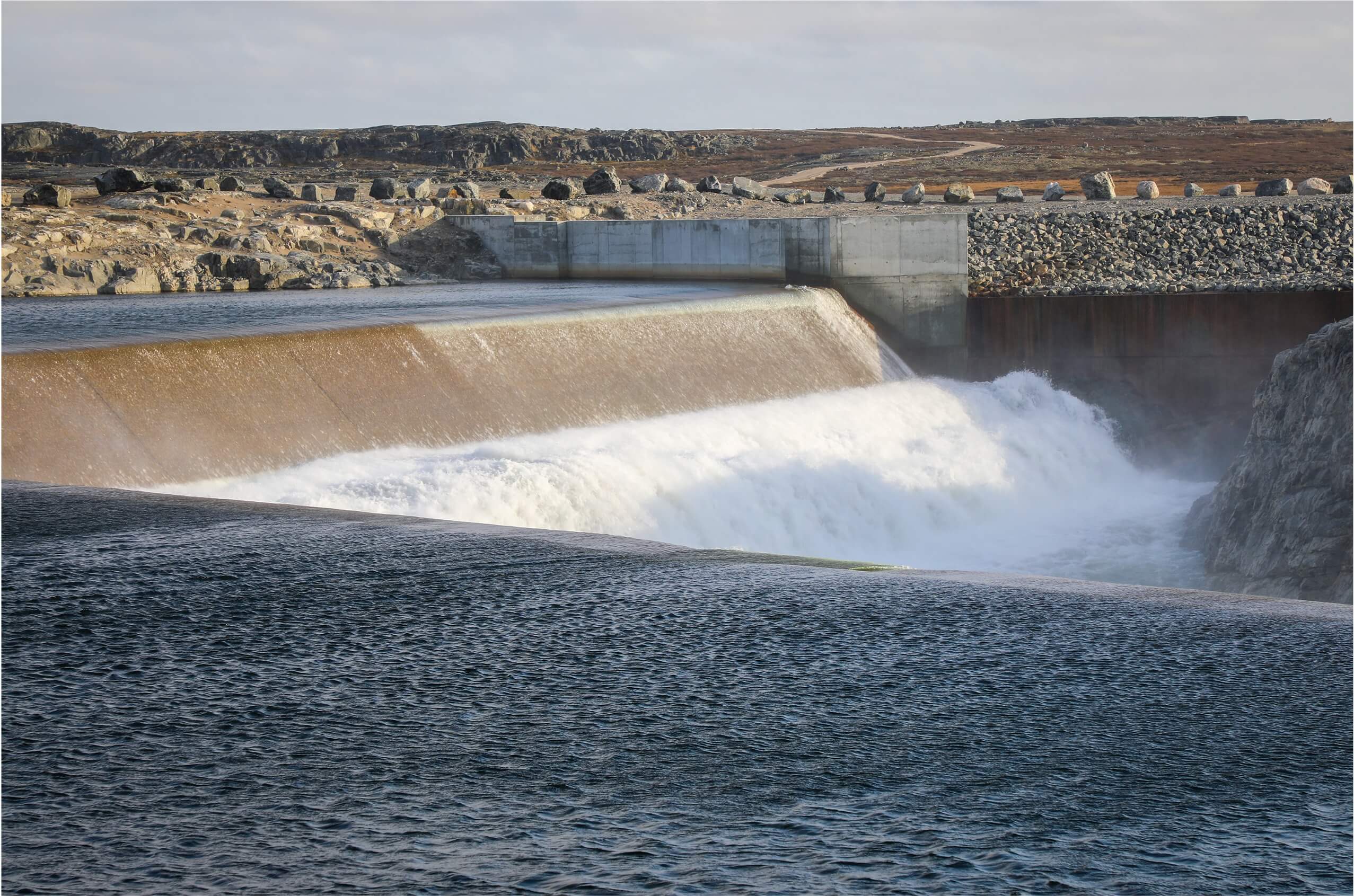
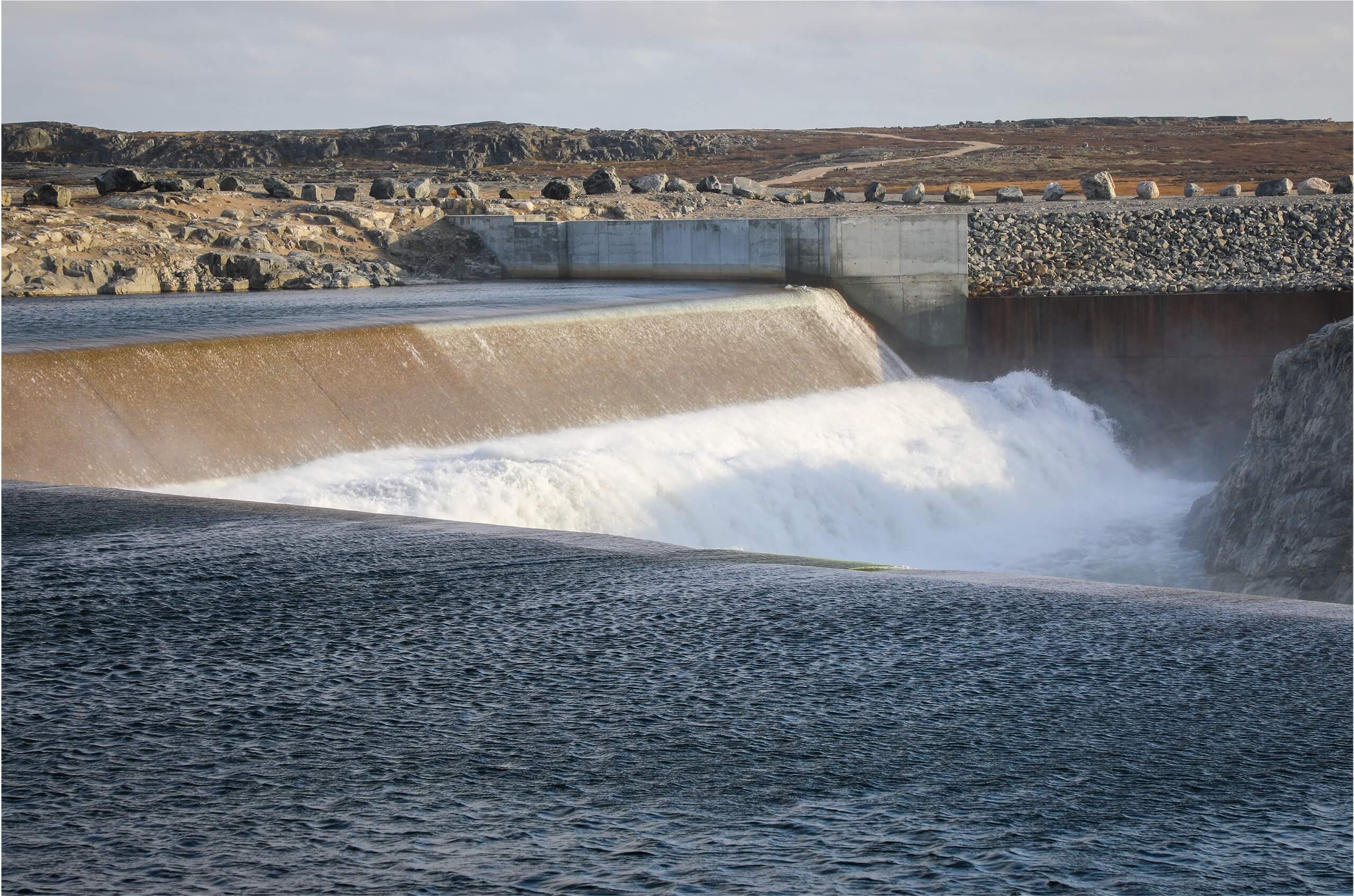
Innavik Hydro on the Innuksuak River. This 7.5-MW, Inuit-owned facility is Canada’s largest off-grid hydropower project.
Lina Forero
Inukjuak’s community-led hydro project shows how Indigenous ownership can drive a just energy transition in the Arctic.
It was mid-November 2023 in Inukjuak, Nunavik, when the unthinkable happened.
Nine snowmobiles crashed through the ice and plunged into the dark, Arctic waters. Miraculously, all the drivers, who had been out hunting caribou, managed to scramble to safety. Three skidoos, however, disappeared beneath the surface, too deep to retrieve.
Eric Atagotaaluk, who has spent most of his life in the community, says he has never seen anything like it. The ice — long the foundation of Inuit life — is no longer predictable.
“We used to think that the ice was thick enough to go on it by then,” he says, “but even the fall was so mild that the lakes’ ice was still very thin. It’s hard to predict now because of climate change. It’s getting scary.”
For Inuit hunters, the consequences of climate change stretch far beyond damaged or lost snowmobiles. Thinning, unreliable ice conditions threaten not only their safety but also the community’s access to traditional country food—such as caribou, seal and fish—central to Inuit cultural identity and essential to physical health and emotional well-being.
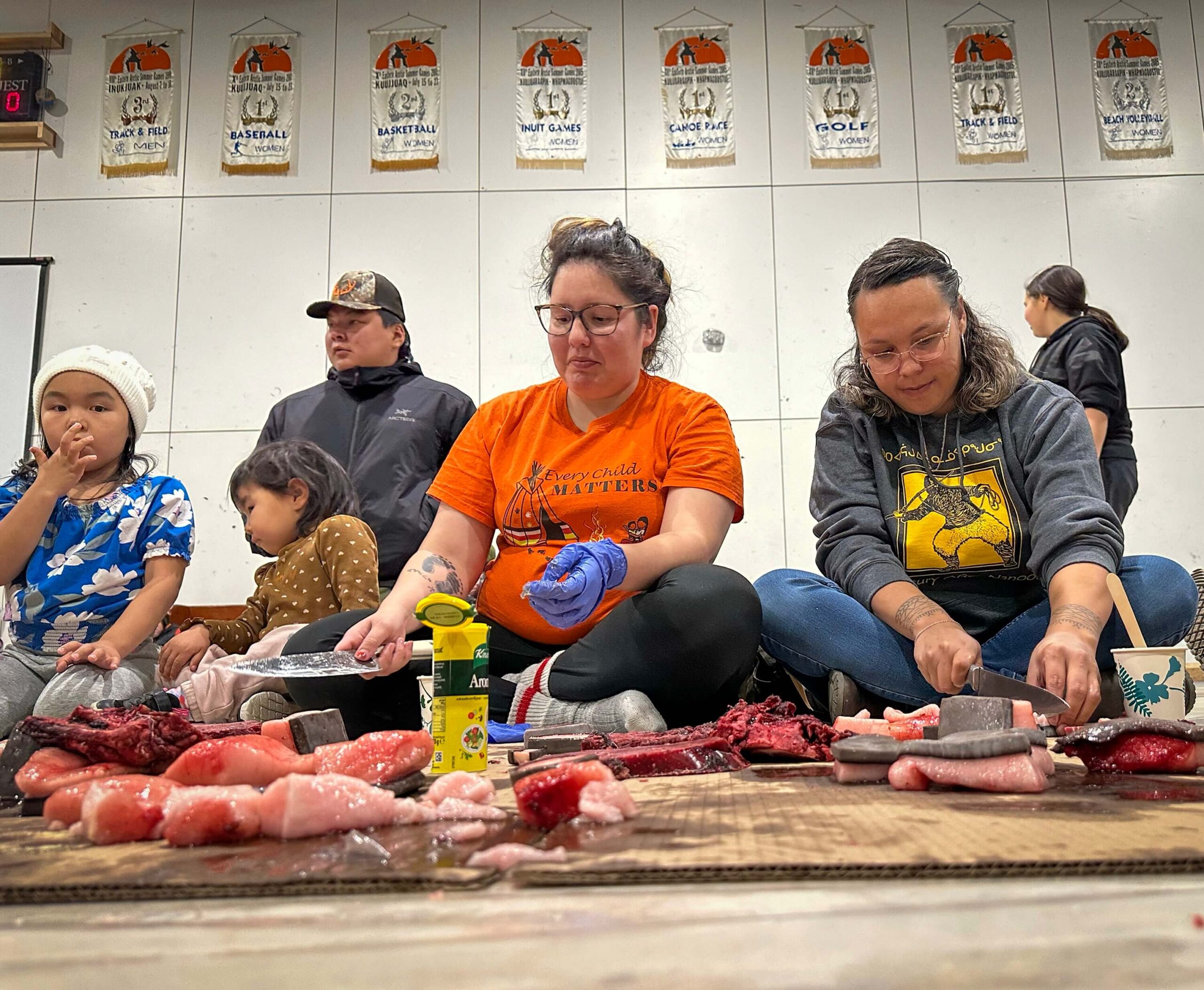
Community members in Inukjuak gathered in October 2024 to share a feast of traditional food.
Lina Forero
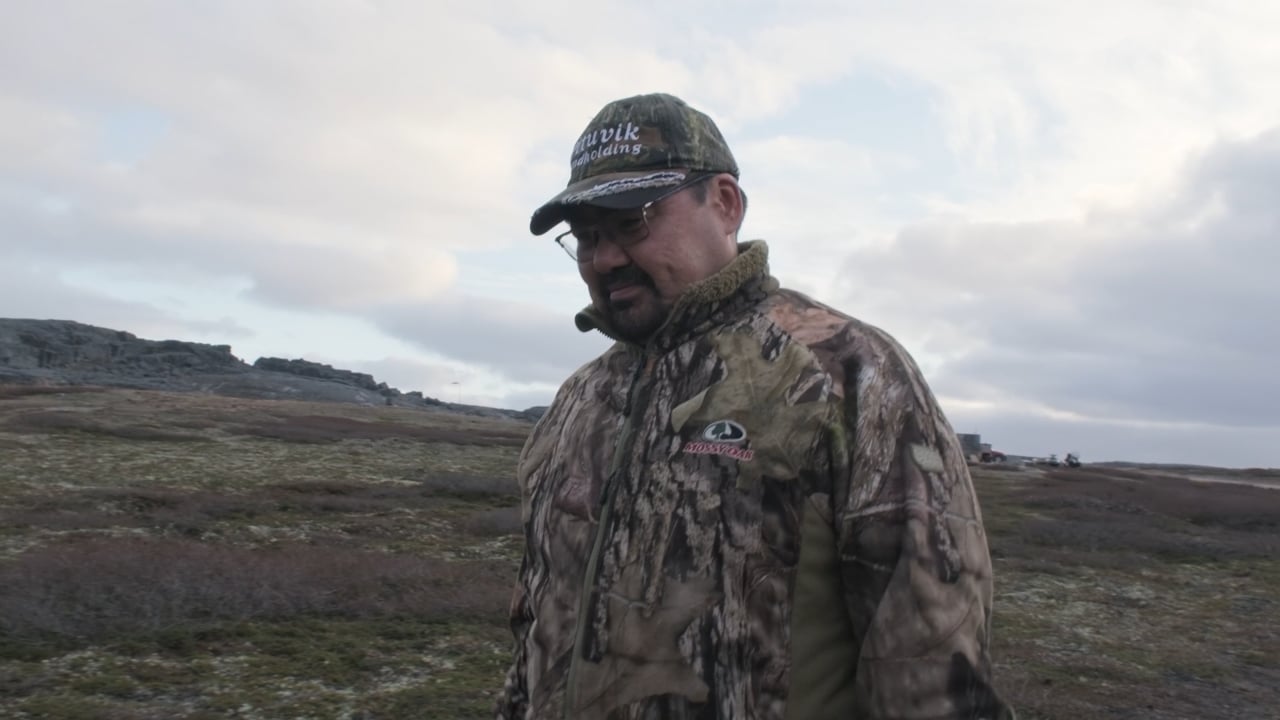
“We depend on our country food regularly,” says Tommy Palliser, President of the Pituvik Landholding Corporation, and a hunter himself. “But now we can’t hunt comfortably. We’re always worrying about the ice — something we never had to think about before.”
Thinning ice is shortening hunting seasons and making them significantly more dangerous.
Aware of these changing patterns, the community began to think about the world they will leave for their children and grandchildren. Protecting the land — and the ability to live from it — means finding ways to adapt that honour tradition while embracing new possibilities.
“That’s when we started becoming concerned about it and started learning that we have the opportunity to change that. We’re fortunate to have a river that has continuous flow throughout the year, even in wintertime, which allowed us to develop a hydro project,” explains Atagotaaluk, Director of Pituvik Sarvaq Energie Inc., which oversees the Innavik Hydro project, an Inuit-led run‑of‑river hydroelectric plant that is replacing diesel with clean local power.
A clean energy dream realized
Since the 1960s, Inukjuak — ᐃᓄᒃᔪᐊᒃ in Inuktitut, meaning “The Giant” — has relied on millions of litres of imported diesel for electricity, heating and hot water. Its geographic isolation made the idea of a cleaner energy future seem like a distant dream.
Now, that dream is becoming a reality with the Innavik Project, a 7.5-megawatt run-of-river hydroelectric facility, which has reduced the community’s reliance on diesel by 80 per cent, according to Atagotaaluk. Residential electricity needs, including home heating, have now been fully transitioned to hydro power.
Commercial and institutional buildings — about 20 per cent of the total demand — still rely on diesel. Chris Henderson, the founding executive of Indigenous Clean Energy and the project’s primary advisor, explains that converting larger facilities, such as schools, remains challenging because their heating systems are more complex and costly to replace.
Pituvik Landholding Corporation is currently looking for funding to complete those upgrades.
Unlike large hydro dams, run-of-river systems generate electricity from a river’s natural flow without creating major reservoirs, reducing environmental disruption.

Arctic Remote Energy Networks Academy (ARENA) participants tour the Innavik Hydro site in Inukjuak, October 2024.
Lina Forero
The trust-building journey behind the project
The Innavik project required years of environmental studies, negotiations and community consultation.
“You have to study the environment, understand the wildlife and bring the community on board. You have to find partners, negotiate with the local utility (Hydro-Québec), get governments on side and secure funding,” says Chris Henderson, founding executive of Indigenous Clean Energy and the project’s advisor. “It takes fortitude to push through all of that. But ultimately, it’s the community that makes it possible. Without the community, none of it happens.”
One of the biggest challenges was ensuring the safety of Inukjuak’s drinking water throughout construction and after the hydro project became operational. Project leaders described a lengthy process of community consultation and communication to make sure that all concerns were addressed. Without any previous or similar northern hydro examples to show the community, they were asking residents to trust in a vision that had never been proven in a place like Inukjuak, making the project a real risk, but one that ultimately paid off.
“We were trying to look for other examples or other projects that are on their drinking water source, and we couldn’t find any in Canada. So, we sort of used ourselves as guinea pigs… hoping that this project would be as minimally impactful as possible to our drinking water source,” reveals Palliser.
Palliser said many community members feared that construction and the hydro project itself could pollute the river with mercury, affecting both the water supply and fish.
Sarah Lisa Kasudluak, vice president of the Pituvik Landholding Corporation, also recalls that many of the concerns focused on land, water, and animals. “Their concerns were right, and we addressed each question with an answer with consultants, specialists… each question that they had, we made sure to get the right answer. And that was how things got rolling.”
Updates were shared through the local radio station, Tuulliup Nipingat FM — the community’s primary source of information.
“It is an outlet for the community, for all that’s happening. That’s our number one source for information — It’s our information station.”
During construction of the Innavik Project, a team member visited the local radio station each week to update the community on daily water-quality testing. Since completion, testing has moved to a weekly schedule with public updates provided annually, according to Atagotaaluk. The project team still submits weekly water-quality reports to the Quebec government, and any unusual results are immediately communicated to the community via radio.
“In 2019, before the project began, we studied the fish species in the area and assessed their health,” he explains. “We conducted two fish surveys,” says Atagotaaluk. “The first was in September 2009 and the second in July 2019.” He recalls that each lasted about two weeks.
“Now that the facility is in operation, we’re required to conduct follow‑up studies at the five‑year, 10‑year and 15‑year marks to track any potential contamination.”
Still, some community members have mixed feelings about the project.
Former Inukjuak mayor Pauloosie Kasudluak feels the initial fish studies should have been conducted for a longer period to gather more data.
He explains that the river is home to many species — lake trout, brook trout, whitefish, Arctic char, suckerfish and others. Species like Arctic char may migrate upstream, but not every year. Kasudluak worries that important information about these fish and their movements may have been missed due to the short study period.
While fish studies were conducted in 2019, additional research is ongoing to assess the environmental impacts of building a dam on permafrost in Inukjuak. Researchers at the University of Montreal are continuing environmental monitoring, including an assessment of the impacts of infrastructure development on permafrost.
Atagotaaluk says the concerns were understandable.
“I understand in a way they were afraid that we were going to damage the river. We ourselves were questioning it, even though we were part of the development team. We were kind of unsure. Are we risking damaging the river? It’s our water source. There’s fish there. We still use it for fishing.”
Yet over time, he says, the community has been learning that it is possible to develop a hydro project responsibly.
“As hunters and fishers who depend on the land, we had fears about the environmental impacts.And now that [the project] has become a reality. We’re starting to see, at least in the earlier stages, that impacts have been very minimal so far,” Atagotaaluk says.
A milestone of community pride
Another marker of this transition to cleaner energy is the quiet. The constant hum of a diesel-powered generator, which not long ago characterized the community’s energy production, has finally faded into silence.
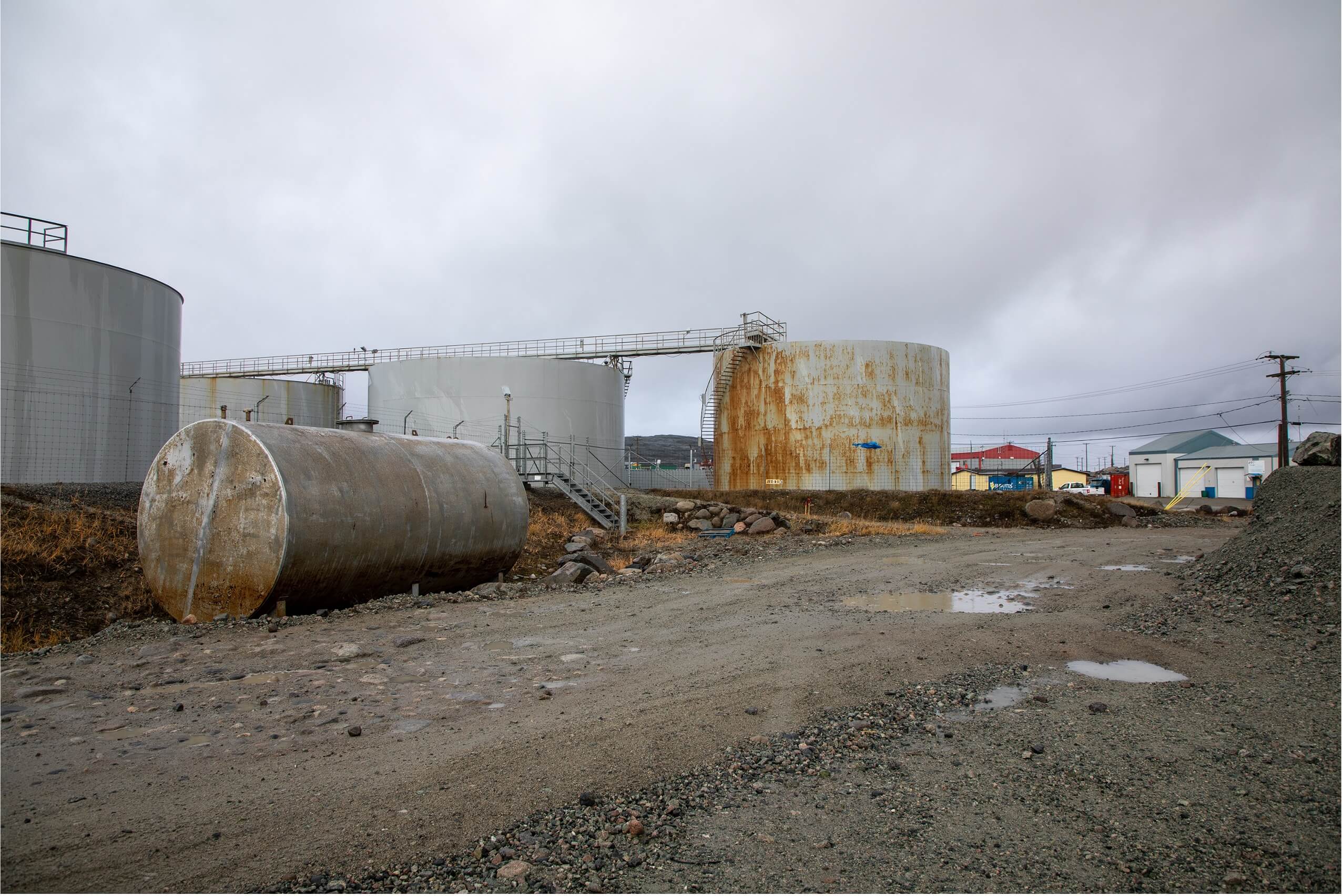
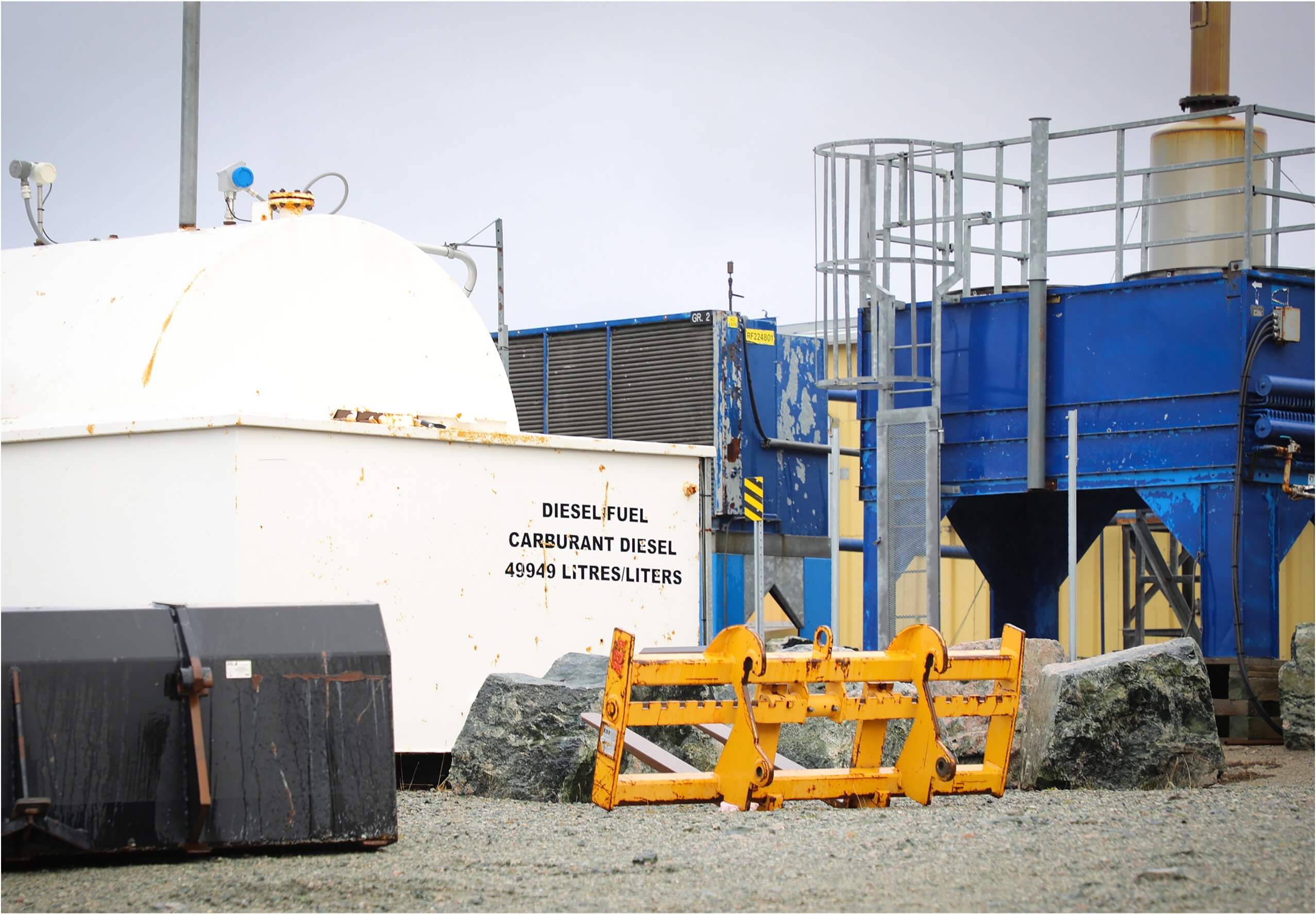
Inukjuak’s old power plant, which stored millions of litres of diesel for heating and electricity.
Lina Forero
“This is the power plant that is no longer running since our run-of-the-river has been producing electricity,” says Kasudluak. “This plant burned millions of litres a year to sustain the community’s electrical needs and heating. It was our main source of electricity.”
The Innavik Hydro project, fully operational since the fall of 2023, is cutting emissions and stabilizing long-term energy costs.
“We are very proud,” she says. “We’re not 100 per cent yet — but we’re getting there.”
Learning by doing
It took 20 years for this project to finally get off the ground — so long that many people began to doubt it would ever happen.
“There was a time, during the development stage, when it was kind of dormant, when there was nothing happening. It was people saying that it wouldn’t happen at all,” recalls Atagotaaluk
He remembers that at the beginning, they had no idea how to develop a project like this, but thanks to the guidance and support of the people around them, they learned as they went. And because it was such a learning experience, they are now eager to share it with others.
“With all the challenges we went through, it makes you want to share that experience,” Atagotaaluk reflects. “If someone else is going to go through this, we’re happy to share what we learned and the challenges we faced.”
Patience was perhaps the most important factor. As Sarah Lisa puts it, “You have to be hopeful if you want things to change. I think patience is key to that.”
Powering economic growth
Rooted in the community’s commitment to reducing greenhouse gas emissions, the project is expected to create lasting environmental, social and economic benefits for nearly 2,000 residents.
Under a 40-year power purchase agreement signed in 2019, the community sells surplus electricity to Hydro-Québec.
Palliser says the project is projected to generate about $4 million annually in its first seven years, then about $2 million per year for the following 15 years, before declining to roughly $1 million annually.
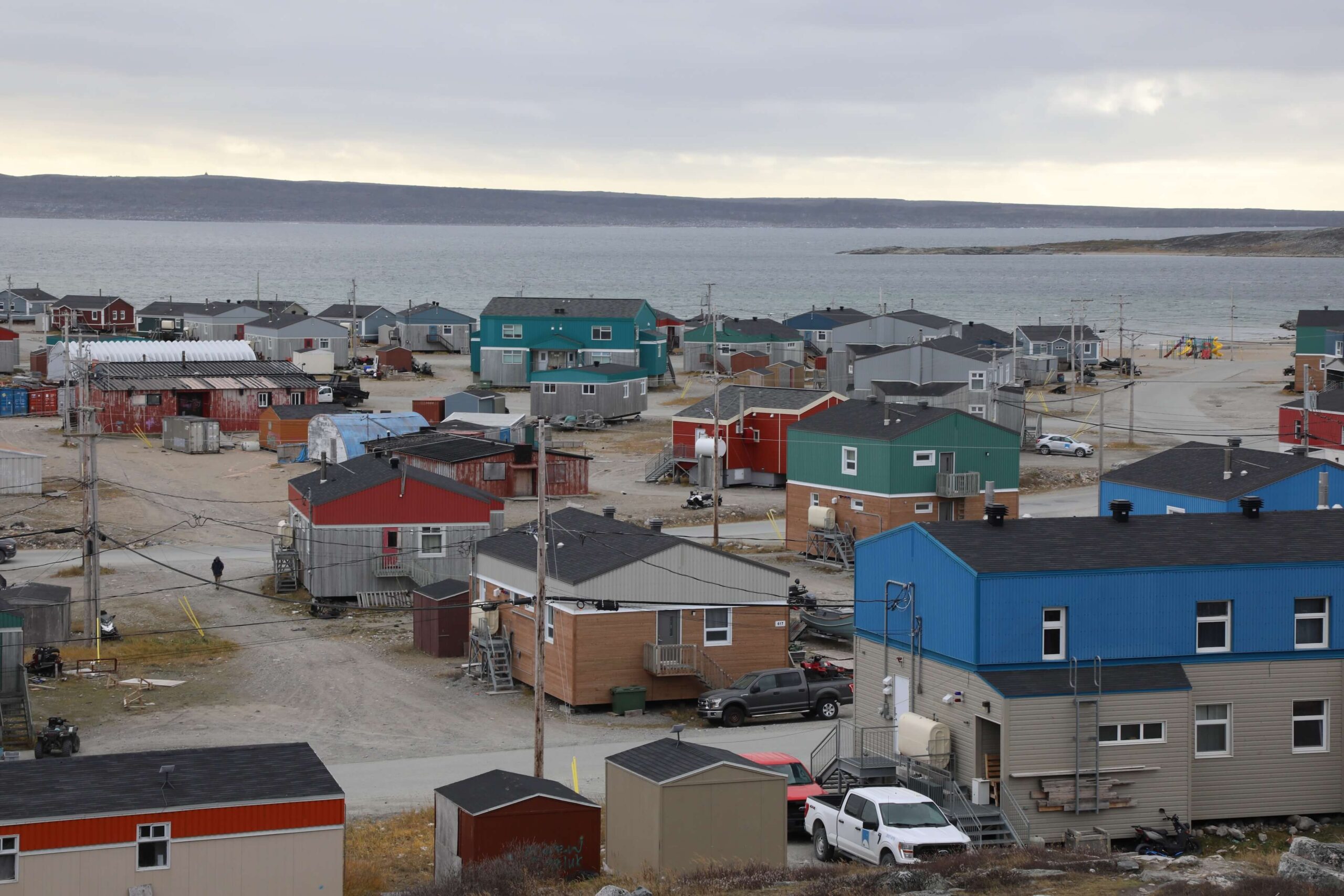
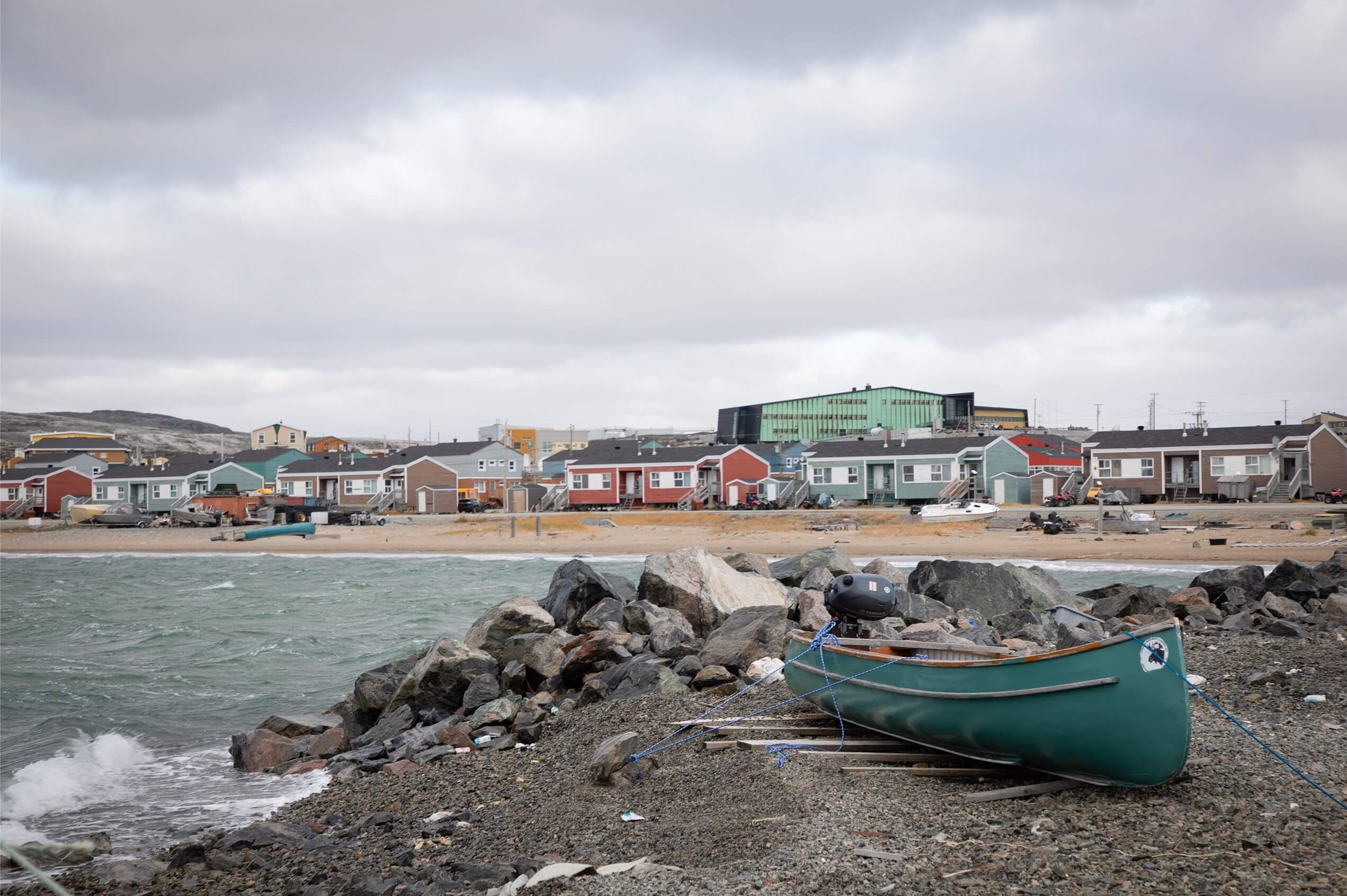
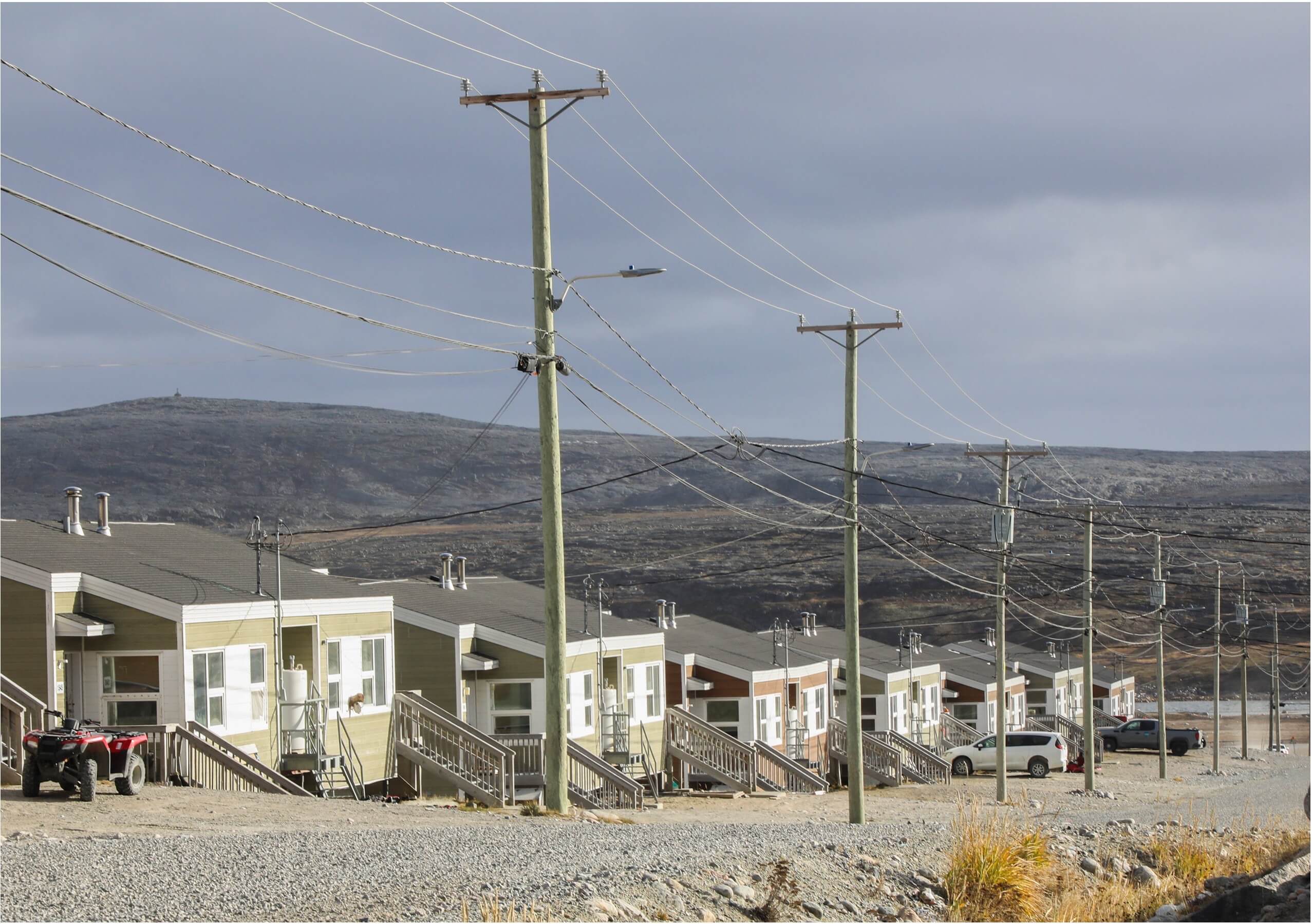
View of community homes in Inukjuak, Nunavik.
Lina Forero
Those revenues — expected to total tens of millions of dollars over four decades — will be reinvested locally.
“We want to use that money as seed funding,” Palliser says.
Their vision is to grow the initial $4 million to $40 million by attracting additional resources and supporting local organizations — all while ensuring a reliable, clean energy supply that can sustain Inukjuak’s growth for the next four decades.
The project’s revenue will support educational, social and infrastructure programs, as well as traditional cultural initiatives for children, youth and elders.
One such initiative is Unaaq, the Men’s Association of Inukjuak. Founded in 2004, the program pairs young men with Elders to reconnect them with traditional skills and cultural knowledge.
“This is where our young men are taught traditional carpentry skills and how to make traditional equipment they will use throughout the winter, as part of the programs we teach,” Palliser says, standing in Unaaq’s workshop. “They learn how to use it to provide country food for their families and the community. It builds pride.”

Charlie Elijassiapik of Inukjuak’s Unaaq Men’s Association builds a miniature sled, sharing traditional hunting and tool-making knowledge with youth. This is one of the many initiatives the community plans to support with Innavik Hydro revenues.
Lina Forero
Like the Unaaq, other initiatives aim to strengthen intergenerational knowledge-sharing and cultural continuity.
“We will decide on how we want to use the – whether it’s for traditional practices, training, cultural activities, our language protection, our own [Inuktitut] language,” explains Atagotaaluk.
Kasudluak also shares her dream of having a dedicated space where everyone can learn about traditional knowledge and come together for community events. “I always talk about the cultural centre, which can also be a healing centre,” she says. “With the funding we are going to be receiving, there’s the social aspect, the education aspect, and the socio-economic development aspect.”
“This is going to be a big change for the community, and it will really enhance our lives.”
Partnerships that made it possible
The $125 million project was financed through a mix of loans, grants and partnerships. In 2020, Pituvik entered a 50–50 partnership with Innergex, a Québec-based renewable energy producer with experience working alongside Indigenous communities.
“We found a partner experienced in renewable energy projects — not just hydro — with a history of working alongside Indigenous communities,” says Atagotaaluk. “That experience mattered because we needed someone who understood our priorities.”
Innergex supported the Pituvik Landholding Corporation in navigating the power purchase agreement with Hydro-Québec, the construction process, and environmental assessments required to move the project forward.
From Innergex’s perspective, the partnership was built on respect and collaboration rather than control. “We were invited to support the community in building their project. We would not have gone there to impose anything, and that makes a world of difference,” says Michel Letellie, former President and CEO of Innergex. “This is their project. They are the ones who initiated it and who will live with that infrastructure in their territory. We’re proud to contribute, but our role was to support.”
Building that relationship took time. Letellier notes that many communities have had difficult experiences with outside companies making transparency and consistency essential to earning trust.. “We knew we had to be fully transparent,” he says. “It wasn’t easy at the beginning, but as we’ve worked together and delivered strong projects with [other] communities, that experience has helped build trust and made it easier for communities to see Innergex as a partner.”
Beyond financing and technical expertise, he says the partnership contributed to something less tangible: a growing sense of confidence within the community. “That sense of pride is powerful, especially for younger generations who can now look at this project and say, ‘That’s ours. That’s what powers our community, our village.”
While construction began in 2020 and the project was completed in 2023, it was nearly a decade in the making, from the first conversations in 2014 to the first kilowatt produced. The timeline reflects the realities of working in a remote region, ensuring community understanding and support, and navigating unexpected challenges, including building through the COVID-19 pandemic.
The path to 2030
For Inukjuak, the shift to hydro is not only about energy — it’s about sovereignty, resilience and building safer futures for generations to come.
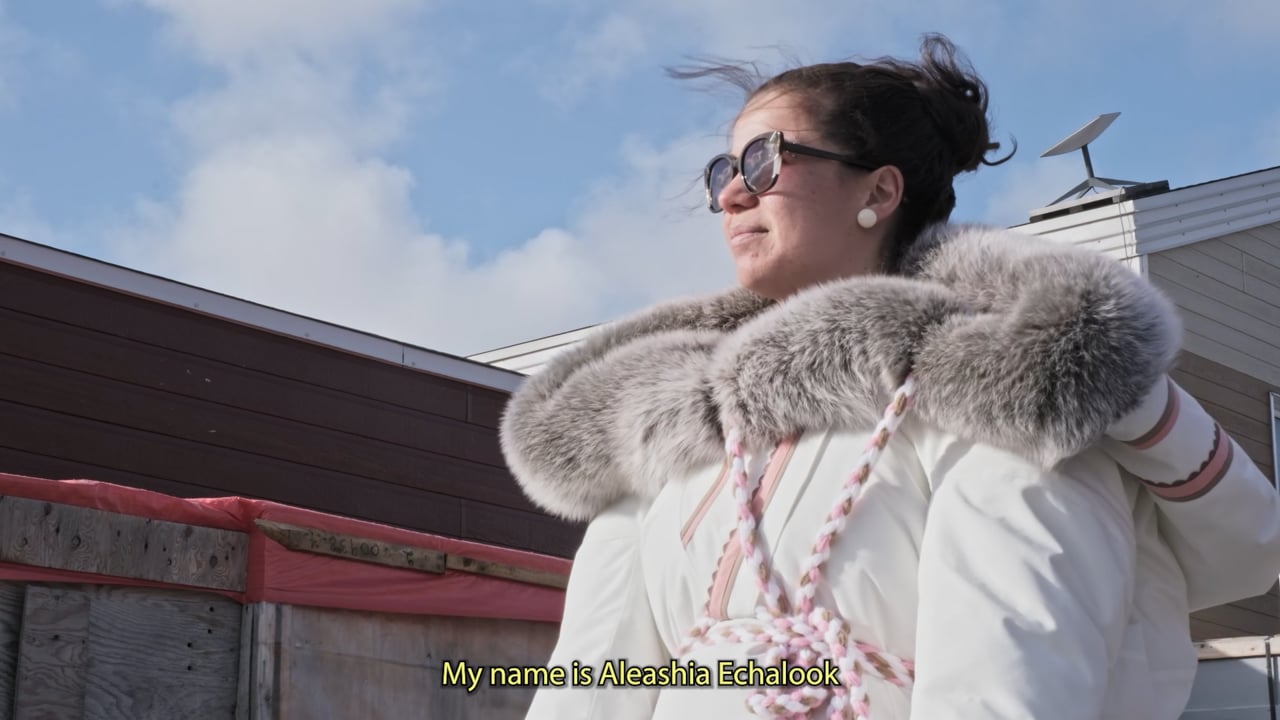
“It’s a very exciting thing for our community, and for future generations too. Now, as the world moves toward cleaner energy, I think we have an important role to play,” says Aleashia Echalook, a mother of three and the youngest board member of the Pituvik Landholding Corporation.
To ensure transparency and accountability, the corporation is establishing a trust fund and committee to manage revenues.
“We want to make sure that we’re responsible, that we spend the money responsibly and transparently to make sure that the community understands and is a part of the decision-making process on what the money will be used for,” adds Palliser.
The community is also exploring next steps — partnering with Concordia University’s Voltage program to research electric and hybrid vehicle options and working with Quebec’s transport ministry to secure funding for electric minibuses.
But their plan goes beyond vehicles: they envision building a complete local EV ecosystem — training technicians, creating a dedicated garage and installing charging stations to serve as a hub for all electric vehicles in the community.
“We want to be net-zero by 2030,” Palliser says. “And I think we’re off to a good start.”
Video Capsules
Meet the Community




Article by Cedric GallanT
Power on their terms: how Inukjuak built its own energy system against the odds

Pituvik Sarvaq Energie Inc. director Eric Atagotaaluk looking onto the land as he prepares for a hunting trip.
Lina Forero
Permafrost, fly-in access and short construction seasons worked against Inukjuak’s hydro project. The community built it anyway.
In 2024, Inukjuak did something few thought possible. In a fly-in Inuit village nearly 1,500 kilometres north of Montreal, where construction seasons are short, and every shipment must cross sea or sky, the community began producing its own electricity. The hydroelectric facility it now operates was not imposed from outside — it was imagined, built and ultimately owned by the community itself. In a region where infrastructure often stalls under the weight of distance and cost, many describe its completion as a miracle.
Nunavik, the vast northern region of Quebec where Inukjuak is located, subjects every infrastructure project — from constructing a house to creating larger buildings — to a logistical gauntlet. Transportation windows are narrow, costs balloon quickly and delays compound. For a small community to deliver a large-scale energy project under those conditions was never supposed to work — yet it did.
The Innavik run-of-river facility took nearly 20 years to realize. By completion, between 200,000 and 300,000 cubic metres of rock had been excavated, and around 15,000 cubic metres of concrete were poured. But before the first blast of dynamite or the first truckload of cement arrived, the real work was bureaucratic. How did it happen?
Owning the idea
Before a single machine started working on the facility, the team behind the project went through 12 years of bureaucratic logistics. In 2006, the Pituvik Landholding Corporation, a community-led company that promotes development in Inukjuak, began exploring the feasibility of a clean-energy project.
“Hydro-Québec has been analysing our river since the 1960s,” said Eric Atagotaaluk, director of Pituvik Sarvaq Energie Inc., the sister corporation responsible for developing Innavik. “We knew eventually that if someone was going to develop a hydro facility on our river, we wanted to be the ones to participate, develop and own the project.”
Alongside their clean-energy advisor and the founding executive director of Indigenous Clean Energy, Chris Henderson, Pituvik had to choose among four projects. In 2009, they selected the location where Innavik now stands and began feasibility studies and environmental assessments.
Before anything else, however, the community itself had to agree.
During that time, the community held a referendum on whether to build a nearby hydroelectric project. “Hydro had a very bad reputation when we started this process; community members were really reluctant,” said Atagotaaluk, especially given Innavik’s proximity to important fishing areas. Community concerns ran deep.

Caption: Indigenous Clean Energy founding executive director Chris Henderson next to Innavik’s water reservoir.
Luca Caruso-Moro
To address them, Henderson spent weeks at the community radio station, the primary source of local information, broadcasting six days a week for five weeks and taking live calls.
The referendum passed with 83 per cent approval.
A long fight for approval
Community backing did not translate into institutional support.
Between 2009 and 2015, the project went through what Henderson called “a very painful process” of negotiations with the Quebec government and Hydro-Québec. He himself spoke to three different premiers during that time and faced consistent resistance.
“If they had agreed to do it when we proposed it, this project would be so financially successful it would be absolutely crazy,” added Henderson.
When the project began construction in 2020, it was valued at $90 million and is projected to generate $50 million for the community over 50 years. “The income that the community would have realised in this project would probably be four to five times what they do now.” Had it been approved a decade earlier, Henderson estimates, the cost would have been roughly half as much and the returns four to five times higher.
At the time, Pituvik and Henderson lacked the financial means to develop the project independently. They made more than two dozen visits to Montreal and Quebec City to meet with the government and the Crown corporation. Hydro-Québec remained firm; they did not want to partner with Pituvik because it was too expensive.
“We are a small local community corporation with little finances,” said Atagotaaluk. “People were insecure if we were going to work on this alone; it was hard for us to manage such a large project and finance it alone.”
It was an ambitious project, and they needed an ambitious partner. Eventually, Pituvik found a partner in Innergex, a Quebec-based clean energy development corporation with projects worldwide. Henderson was the bridge between the two corporations, “I said to them, look, I am a maudit Anglais, I am not Quebecois, we need some horsepower because we can’t penetrate this monolith of Hydro-Quebec and the Quebec government.”
Innergex had the expertise to obtain government authorizations and secure the appropriate financing. “That is when the ball really got rolling,” said Atagotaaluk.
By 2015, with key bureaucratic hurdles cleared, construction would begin four years later.
“We worked closely with residents to address their concerns about the construction of the power plant and spillway on the main river,” said Innergex spokesperson Jade Lachapelle. “This approach made it possible to build a project that respects the community while ensuring the technical and environmental success of Innavik.”
Where distance dictates everything
Every piece of material, heavy equipment and qualified personnel needed to be imported to Inukjuak for this project to succeed. In most cases, that meant coordinating with the two sealift companies serving Nunavik and Nunavut — NEAS and Desgagnés — whose ships operate within limited seasonal windows.
These two companies also have to bring essential cargo to most communities in Nunavik and Nunavut. Taking up a whole ship just for Innavik would be both expensive and a heavy burden for the two companies.
Some employees came from eastern regions of Quebec, such as Gaspésie. For them to match with the schedule of the only airline in Nunavik, Air Inuit, was also a logistical burden that needed to be avoided.
CRT Construction, a Québec-based engineering and construction company, took on the task. “The whole aspect of controlling the supply chain became extremely important,” said CRT Construction’s vice-president Jean-François Turgeon.

Caption: CRT construction building the foundation for the Innavik hydro project in 2021
Kaaria Quash
They decided to acquire a cargo ship and a private plane to circumvent Nunavik’s physical barriers. “My father is still involved, and it was his audacity,” said Turgeon. “He really is a visionary; not many entrepreneurs would have made this decision.”
The boat remains the company’s most expensive asset.
“Our first reflex was, will we be able to successfully deliver the project with those constraints?” said Turgeon. The sealifts require extensive planning since booking reservations for space on the boats in the summer begin in January of the same year.
To miss that window would be to lose vital time during the construction season, forcing CRT to miss deadlines set by permits they obtained, which could have pushed the project’s completion by years.
Air transportation was also necessary, specifically for workers to travel north. Instead of having employees wait for Air Inuit flights, which first go to Kuujjuaraapik and Umiujaq before reaching Inukjuak, they left on a private plane from the Saint-Hubert airport on Montreal’s South Shore and arrived at their destination within five hours.
Even with those two assets, logistics remained a constant burden. “Logistics consumes everybody, every day,” said Henderson. “25-30 per cent of the time of the project was just logistics.”
Recounting a previous project he worked on in Northern Ontario, Henderson said he had exchanged over 7,000 emails advising people about logistical problems. “I have not [counted the emails] with this project because I am scared of what the number would be,” he admitted.
Every day, a new problem emerged, and ten more would follow suit, all accentuated by Nunavik’s unique difficulties.
“The fact that this thing was built is literally a miracle,” said Henderson.
The real miracle
“Innavik demonstrates that it is entirely possible to build large-scale infrastructure in the North, even in the face of challenges such as remoteness and permafrost,” said Lachapelle. That is thanks to “rigorous planning and the commitment of local teams and Innergex.”
Atagotaaluk remained president of Pituvik throughout the development phase. “If we had too many changes within the board, I don’t think this project would have continued,” he admitted.
He believes the burden of reeducating board members on the complex knowledge of the hydroelectric project that the team at Pituvik gathered over the years would have staunched the flame that pushed them to the finish line.
More than anything, Henderson said, the project endured because people were emotionally invested. “They had to say passionately, ‘yes, we are going to do this, we are going to get over the hurdles no matter what.”
“Logically, we should have stopped somewhere before 2015,” he said. “But the belief in each other, and the belief in what the project could be, is what kept us going.”
Innavik is now the northernmost hydroelectric facility of its kind, built without precedent. For Henderson, it represents something larger.
“In an era defined by climate change and clean energy,” he said, “Inuit communities are expressing their vision in an entirely new way.”
Article by Hayley Carolan
How run-of-river hydropower works

Inukjuak at sunset in Nunavik, Quebec. The fly-in Arctic community of just over 1,800 residents has replaced almost all diesel with locally owned hydro power.
Lina Forero
A closer look at how run-of-river hydro projects generate electricity and where they work best.
Residents of Inukjuak, a Nunavik community located on the east coast of the Hudson Bay, are expected to reduce their greenhouse gas emissions by around 700,000 tonnes over the next 40 years, according to Hydro-Québec.
That reduction stems from Inukjuak’s hydroelectric plant, which opened upriver from the community in October 2023. Spearheaded and developed by Inukjuak’s landholding corporation, in partnership with Innergex Renewable Energy, the project has transitioned the community from depending on diesel generators for power to using cleaner hydroelectricity.
“The carbon footprint of their energy consumption really comes down by a lot,” said Lynn St-Laurent, a spokesperson for Hydro-Québec.
What sets the Innavik Hydroelectric Facility apart is not just where it is, but how it works. The facility is a run-of-river hydroelectric plant, a type of hydropower system that generates electricity with a smaller environmental footprint than traditional dams.
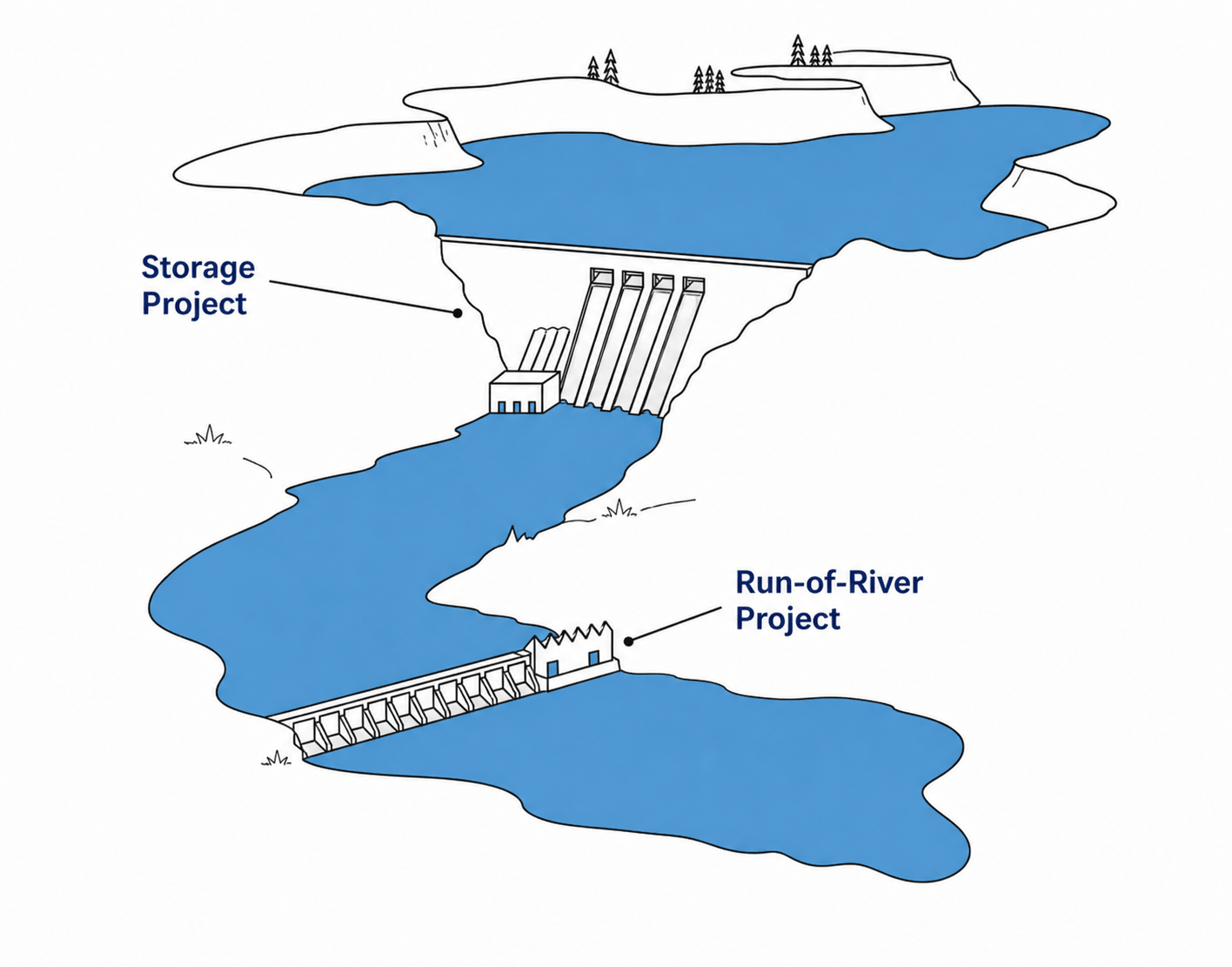
Adapted from original illustrations provided by Pituvik

Adapted from original illustrations provided by Pituvik
How run-of-river hydropower generates electricity
Unlike impoundment facilities, which require flooding vast areas of land for water storage, run-of-river facilities divert only a portion of a river’s natural flow through a turbine to generate electricity. The rest of the water continues downstream, largely uninterrupted.
Since they do not rely on large reservoirs, run-of-river projects typically cause less disruption to surrounding ecosystems, according to Jason Donev, professor at the University of Calgary.
“The process of flooding something, we’re now very aware of the environmental consequences, in a way that we just really didn’t care about when the Robert Bourassa Reservoir was being built,” he said.
Limits of run-of-river systems
That lighter footprint comes with limitations.
Impoundment facilities, which store large amounts of water, can adjust to changes in a community’s electricity demand by increasing or decreasing the flow of water into the hydro plant. In contrast, the electricity output of run-of-river facilities depends on a river’s natural flow, which varies seasonally and doesn’t always match a community’s electricity needs.
“The highest demand for electricity tends to be during winter, when you have the lowest flow of water,” Donev explained.
In Inukjuak, the community is still supplied by diesel generators, with one to two per cent of homes using their generator at any given time to maintain proper system functioning, according to Hydro-Québec. This sort of backup system ensures that even when river flow is insufficient, residents can meet essential needs, such as keeping their homes warm in winter, says Donev.
What determines the design?
Choosing what type of hydroelectric facility to build isn’t as simple as picking run-of-river over impoundment, says Donev. Rather, it’s a question of geography.
“Sometimes run-of-river is the only thing that makes any sense whatsoever,” he said.
Rivers with a large elevation drop between upstream and downstream are well suited for run-of-river designs, he explains. On the other hand, in valleys, reservoir systems are often the only viable option.
In Québec, about two-thirds of hydroelectric facilities are run-of-river. Together, however, they account for only around one-third of Quebec’s total hydroelectric generation, according to Hydro-Québec.
Currently, no run-of-river facilities are being planned by Hydro-Québec. The electricity provider is focusing on adding additional renewable energy sources, including solar and wind, to complement its existing hydropower.
St-Laurent says Hydro-Québec is working to decarbonize the province’s power generation, including in off-grid communities.
“It’s part of our priorities. To create opportunities, collaborations, partnerships and improve relationships with indigenous communities,” she said.
For off-grid communities weighing alternatives to diesel, run-of-river hydropower can offer a lower-impact option.
Innavik in Photos
See the community
See the community and the Innavik project in a series of photos taken by Lina Forero as part of her Concordia MA thesis.






Article by Anasophie Vallée
Reciprocity, reconciliation and rethinking journalism
From their first meeting, Inukjuak community partner Eric Atagotaaluk said Aphrodite Salas and her team were clear about one thing: the documentary would share Inukjuak’s climate journey from the community’s perspective.
Salas, an Associate Professor in the Department of Journalism at Concordia University, and a team of journalism students recently completed a second documentary focusing on the Innavik Hydro project in Inukjuak. Their approach and the film, ᑰᒃ ᑰᑦᑐᖅ — The Flowing River, build on earlier work, including Innavik: Leading the way to a clean energy future and Simeonie Nalukturuk: In His Own Words.
Across these projects, Salas’ method is grounded in reconciliation and informed by Call to Action 86 of the Truth and Reconciliation Commission, which calls upon Canadian journalism programs and media schools to require all students to receive education on the history of Indigenous peoples.
In practice, that commitment translates into a collaborative journalism model shaped by consent, long-term relationship-building and shared agency over how stories are told.
Redefining who controls the story
“For so long, Indigenous communities have had stories taken,” explained Associate Professor in the Department of Journalism at Concordia University, Kristy Snell.
Snell’s research and teaching focus on the decolonization of journalism practice and Indigenous education. In her undergraduate elective on Indigenous journalism, she uses Salas’ first climate documentary on Innavik as a counterpoint to the stereotypes that often dominate coverage of Indigenous communities.
In the course, Snell uses examples of journalism to highlight the negative stereotypes, tropes, and cliches that often appear in the reporting of Indigenous stories. She then shows the class Salas’ documentary as a contrast to the sea of negativity.
“Aphrodite’s focus is more on the community moving forward and really taking control of its resources and developing,” said Snell. “You see Indigenous people doing science, and most of the voices are Indigenous.”
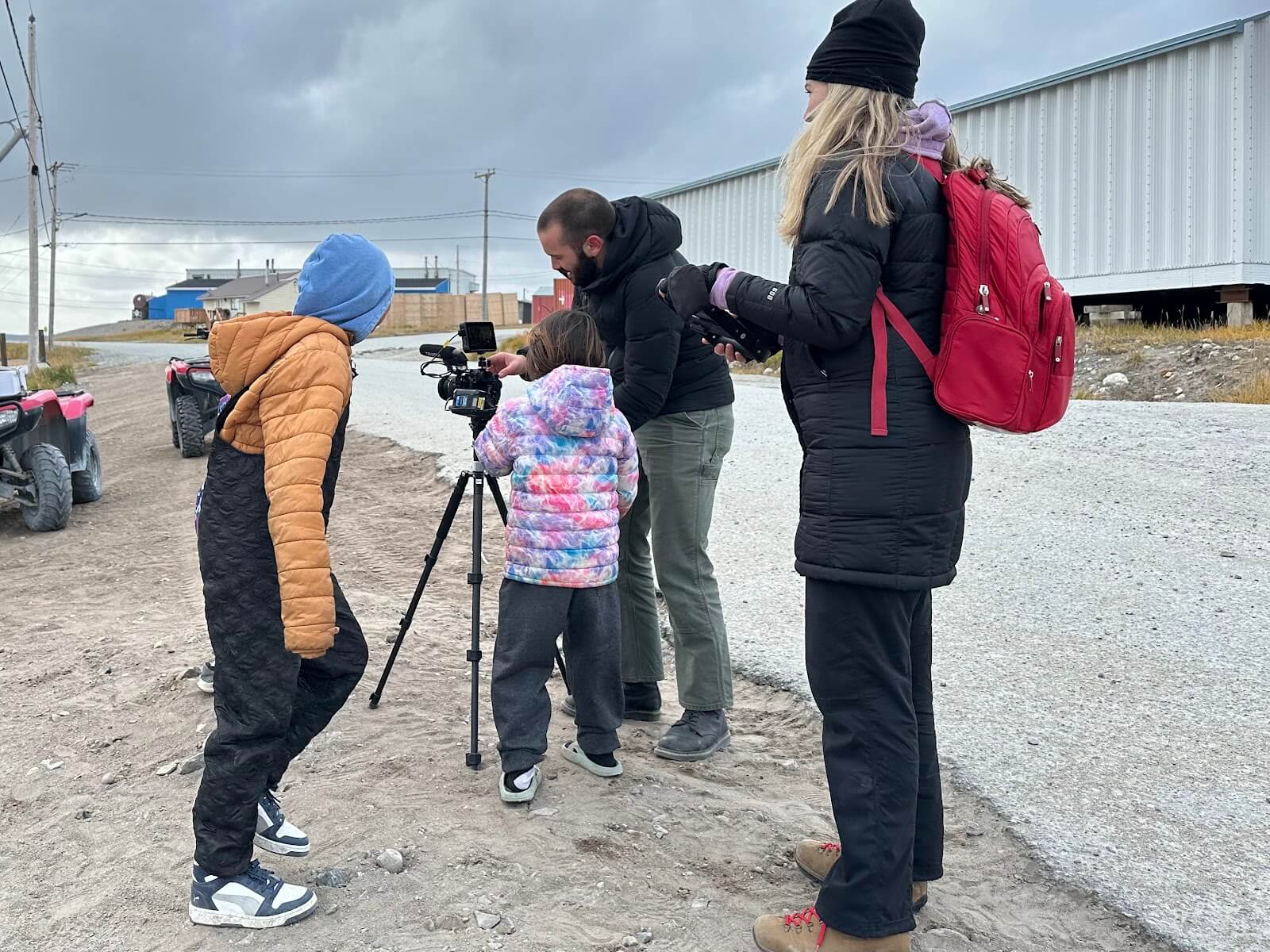
Aphrodite Salas and Luca Caruso-Moro show local residents their mobile journalism recording equipment during a visit to Inukjuak.
Lina Forero
By hearing community members share their own stories, the documentary effectively frames the community’s perspective at its centre.
“I think it just really is an example of how you can choose to tell stories,” Snell emphasized. “It’s not to say that there aren’t issues or concerns or things that communities want to deal with, but it’s just how we frame them, it’s how we choose to frame them that makes such a difference in the telling of the story.”
In Snell’s opinion, taking a collaborative approach to journalism by working with communities, considering their priorities, and ensuring consent and agency are all essential when sharing Indigenous stories.
“You don’t want to just come in and be extractive and take that thing that you want for you,” she explained. “You know the story that you want to tell, you want to ensure that the community you’re working with has agency and that they have a say in the process.”
In quoting her colleague, journalist and Associate Professor at Carleton University, Duncan McCue, Snell stated, “You want to be a storyteller, not a storytaker.”
As a non-Indigenous journalist, Salas emphasized that she makes a further distinction between being a storyteller and sharing stories with permission.
“I’m not a storyteller, I share stories with permission,” she explained. “That’s how I see it because I don’t even want to be called a storyteller of their stories, it’s not what I feel I am.”
Building trust before the camera turns on
When taking a collaborative approach to covering Indigenous stories, there’s a lot going on behind the scenes to ensure the process is inclusive, open and transparent.
Building relationships and trust with the community before filming was integral to making the documentaries, and it came organically.
For the first documentary on the Innavik Hydro project, Salas, the journalism students, and the community partners held numerous virtual meetings in the lead-up to their visit to the community.
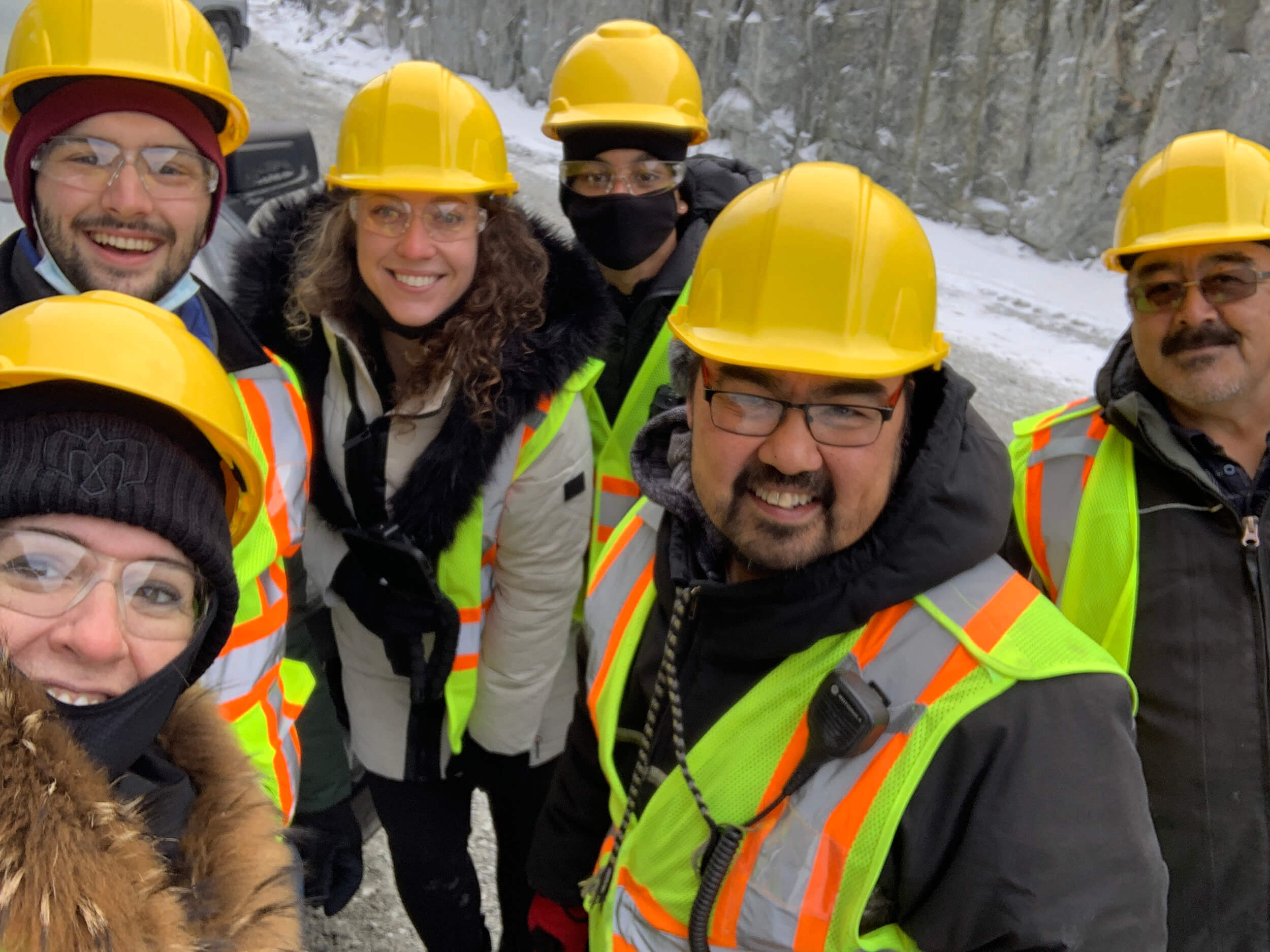
From left, Aphrodite Salas, Luca Caruso-Moro, Virginie Ann, Kaaria Quash, Eric Atagotaaluk and Johnny Mina at the construction site of the Innavik project in 2021.
Aphrodite Salas
Atagotaaluk stated that these conversations helped community members become more open throughout the process. They felt less skeptical about whether the story would be covered accurately.
“I think it allowed us to be a lot more open to them and to their questions and go a little deeper in what we would have shared if we had not been introduced beforehand,” he explained. “At the end of the day, when they came, we felt very comfortable responding to all their questions; it made it a lot easier.”
He added that they immediately understood that the team wouldn’t be coming to the community solely to take a few pictures of the project and discuss the facts.
“It was very collaborative and very open,” he said.
A watershed moment in listening
As soon as Salas and her team arrived in Inukjuak for their first trip in 2021, one of the team members — Concordia University graduate and CBC North reporter Virginie Ann — recalled being greeted by very unique weather. A blizzard was moving in, and Atagotaaluk said he was surprised they had landed at all.
“It felt like we were in another dimension, it was just so beautiful and rough,” said Ann. “I think it all hit us that we were somewhere else and that we were going to learn so much by being there all together for an amount of time that would allow us to connect.”
No matter the level of preparation, the most valuable lessons often come when least expected.
It was during that first visit that Salas and Concordia graduate and CTV News journalist Luca Caruso-Moro interviewed former Inukjuak mayor Simeonie Nalukturuk for the first documentary. It was an interview that Salas described as a watershed moment in her understanding of deep listening.
Salas explained that after asking one question, she realized it wouldn’t be a typical interview.
“It was like as soon as he started talking, I realized, okay, this is actually not an interview, I’m not going to be asking questions, I’m going to listen,” she recalled.
“It took a lot in that moment to do that, to release the power of the journalist and the expectation that this was going to be a question-answer situation, and instead, I really understood in that moment that that would be an incorrect way of approaching this exchange.”
Mayor Nalukturuk continued to share his story for approximately 20 minutes, after which they left. It wasn’t until months later, while working on a final cut of the documentary, that they found out he had passed away.
“When that happened, I felt very wrong about the way the documentary was,” recalled Salas.
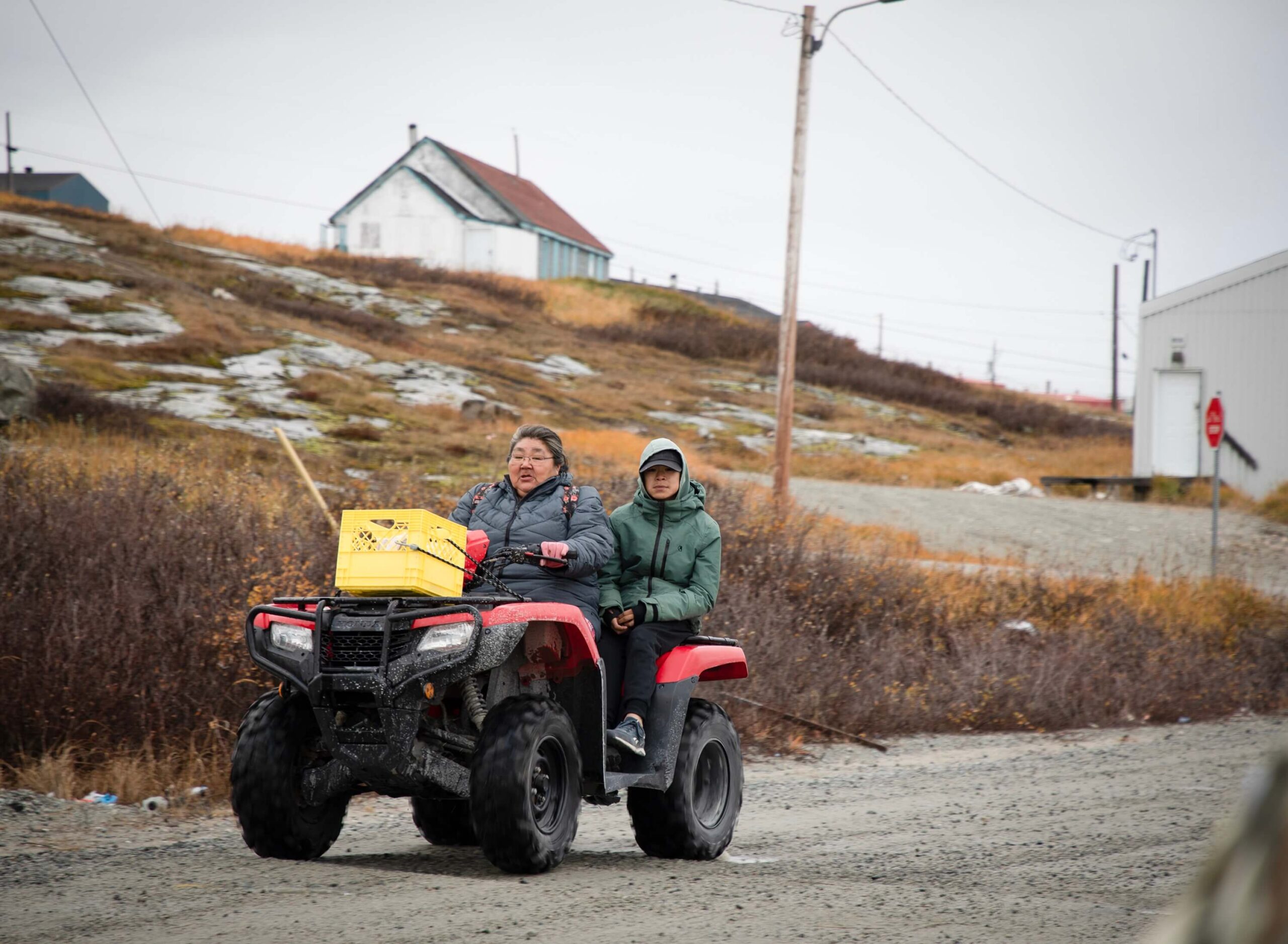
Community members travel throughout Inukjuak by ATV, one of the most common means of transportation in northern communities.
Lina Forero
During their time together, Nalukturuk had shared details about three major traumas that the village had suffered: the forced relocation of people to the north, the residential schools and the killing of their qimmit, Inuit sled dogs. But only a few short clips had made it into the climate documentary.
“That was his message, and I had cut it up and put it in the climate documentary to really neutralize a lot of that, which is what Western journalists do,” she said. “That’s what we do, that’s what we’ve done, and that was the problem from the beginning.”
Instead, they decided to keep the 20-minute interview intact and create a separate documentary, Simeonie Nalukturuk: In His Own Words, as a tribute to the mayor.
Atagotaaluk shared that he felt the tribute was very touching for the community and that Salas and her team were very fortunate to have met the mayor when they did.
“In the end, I think it was really the strongest journalism because it was true to the message. It was true to their reality. It was true to what the community wanted to talk about,” explained Salas. “It’s really interesting in retrospect, but it’s also reflective of how these lessons come.”
It was a lesson that later informed the next documentary in the practice and length of the interviews.
Slowing down the process
After working on Salas’s various projects, Ann said she has taken away many valuable lessons that have helped inform her practice throughout her career.
She explained that working on these documentaries taught her patience and an understanding of the rhythm of reporting on Indigenous stories.
“It’s 100 per cent their stories,” she stressed. “You have to respect that in a very different way than traditional journalism teaches you to do things.”
Rather than being a casual observer, Ann said you have to involve yourself and your soul in a way that perhaps you wouldn’t do in Western journalistic practice.
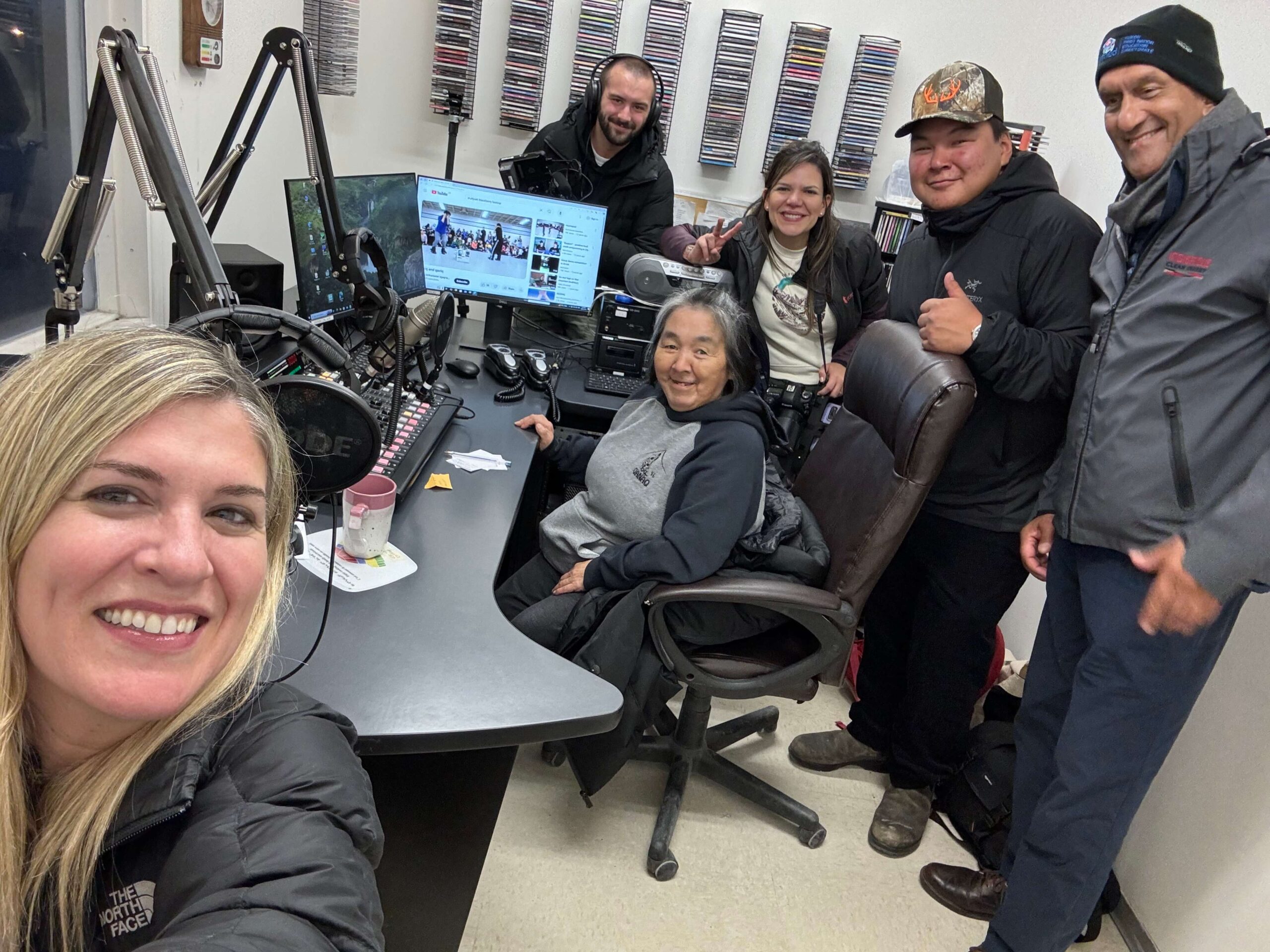
From left, Aphrodite Salas, Luca Caruso-Moro, Akinisie Nayoumealuk, Lina Forero, Joshua Nathan Kettler and Chris Henderson at Tuulliup Nipingat FM in Inukjuak.
Aphrodite Salas
She added that it is a much slower process that calls for a lot of empathy and building bonds, which may go against what you believe you’re supposed to do as a journalist.
While filming in the community, Ann recalled taking time to have tea with community members, visiting the radio station, hanging out and having a few jam sessions.
“Building trust with your sources so that they don’t feel like they were just a story,” she stressed.
Accountability after publication
Collaboration can often mean slowing down the pace and rhythm of reporting to ensure a story is shared the right way.
The typical daily news cycle consists of fast-paced deadlines that journalists often scramble to meet. When sharing Indigenous stories and collaborating with those whose stories are being told, the mindset shifts from meeting a deadline to meeting people where they are, when they’re ready.
As a journalist, Ann explained that taking a more collaborative approach “teaches you a lot about being patient and accepting that it doesn’t happen whenever you want it to happen.”
“At the end of the day, this is not about you,” she stressed. “And if the person doesn’t want to go there and talk about that, you cannot force someone to meet you there if they’re not ready.”
The impacts of colonization and resulting intergenerational trauma are present and rooted in Indigenous communities across Canada.

A local dog sits outside the Northern Store in Inukjuak.
Lina Forero
Collaborating with the Inukjuak community meant having discussions before interviews to better understand the history that led to where they are now.
In conversations leading up to their visit in 2021, Ann recalled learning that years ago, the community’s sled dogs had all been killed by the RCMP and Quebec provincial police.
“That was something that we had learned about prior to heading there,” she said. “But reading about history is so different than when you’re in the place where it happened.”
Making their stories heard
Researching and preparing a story is an important journalistic practice, but the sustained collaboration from start to finish distinguishes this project from traditional journalism.
Journalists are often taught not to show their work, especially the finished product, to those they have interviewed prior to publication. To the contrary, Salas believes that “if you’ve done your job properly, when you show your work, there shouldn’t be a problem.
“The amount of communication, preparation and thought that it takes to produce something means that you’re doing it right,” she emphasized. “You’re giving the community the chance to see it and provide input if they think that you’ve misrepresented them in some way.”
Unlike many stories drawn from Indigenous communities, Ann expressed her hope that the collaborative approach to creating these documentaries would contribute to reconciliation and help rebuild trust in the media.
She emphasized her belief that all participants in this project belong to a generation of journalists who create work in diverse ways.
In turn, Atagotaaluk expressed his belief that the collaborative approach fostered a sense of pride within the community.
“I think it gave us a lot more pride since they were collaborating with us on the final product of the documentary, which led to a second documentary,” he explained.
He added that Salas and her team’s decision to create a second climate documentary focusing on the post-construction phase of the Innavik Hydro project demonstrates their desire to capture the community’s plans for the future.
“Our story got to be heard,” he said. “There’s not a lot of positive stories that come out of our region.
“This is one positive story where a community decided to do something to make a difference in their community, and for Aphrodite and her team deciding to come and cover this story with a lengthy documentary, allows for our story to be heard around the world, which we don’t get to have often.”
In the process, the act of journalism itself became part of the story — not as extraction, but as exchange.

The people behind the work
A collaborative, community-rooted team
This work is shaped by relationships with community members, students, researchers, and partners who contribute to the project with care, accountability, and shared purpose.
Meet the TeamAphrodite Salas


